The $25M Deepfake Heist: Why “Tap to Approve” is Dead
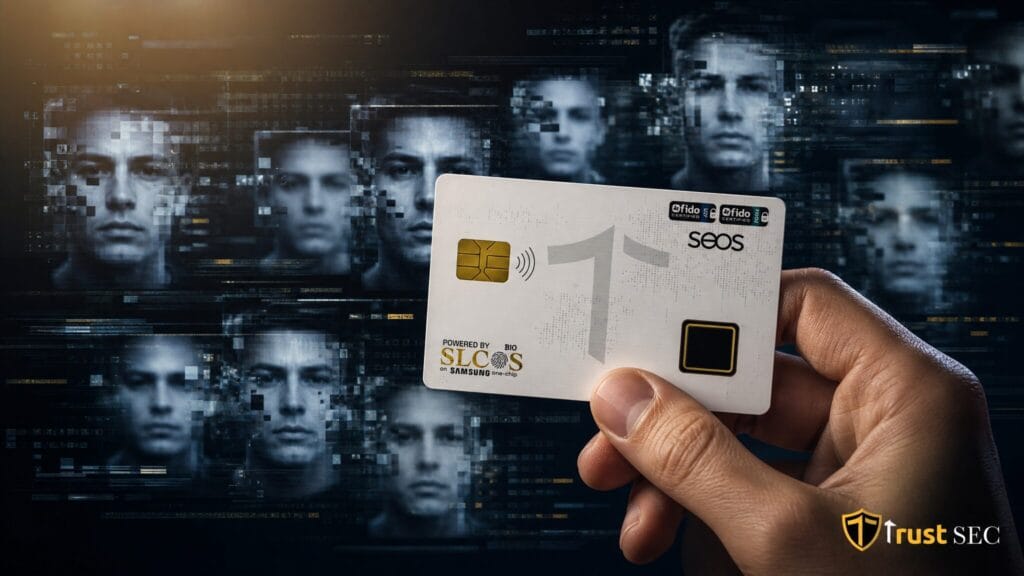
A finance employee just wired $25M after a video call with their CFO and four colleagues. Every single person on that screen was an AI deepfake. This isn’t a future threat model, it’s the current reality of social engineering. And it exposes the fundamentally broken assumption underlying most Multi-Factor Authentication (MFA): Relying on a human being to make a judgment call under pressure. Whether it’s an SMS OTP, a voice prompt, or a push notification, traditional MFA ends with a human typing a code or tapping “Approve.” Now that voice cloning and real-time face-swapping are available as low-cost subscription services, adversaries don’t need to break your cryptography. They simply talk your employees into surrendering the factor. If a human can read it, type it, or tap it, an AI can trick them into passing it along. The Fix: Eliminate Human Judgment from the Trust Model To defeat synthetic media and real-time proxy attacks, the root of trust must move into physical hardware that a human—or an AI impersonating one—cannot hand over. Here is why true Phishing-Resistant MFA (FIDO2 / PKI) changes the equation: Non-Exportable Keys: Private keys are generated and sealed within a dedicated Secure Element. They cannot be extracted by the OS, a phisher, or the user themselves. Cryptographic Domain Binding: Authentication is tied to the exact WebAuthn domain origin. On a spoofed site, the key simply produces no valid signature—the protocol itself rejects the wrong origin before a human ever gets a chance to be fooled. Physical Presence Verification: A physical touch or biometric scan confirms local user presence. There is zero transmittable secret for a deepfake to relay. A cloned voice can be convincing. A deepfake video can be flawless. But neither can talk a hardware key into signing an authentication request for the wrong domain. The Real Vulnerability Deepfakes didn’t out-calculate modern security they exposed authentication methods that still depend on human certainty. As synthetic media scales, “trusting the user to verify” is no longer a security control. It is a vulnerability. The only thing left unfakeable is the hardware key in your hand. Where is your organization still relying on human judgment inside the authentication chain—and what’s slowing the move to phishing-resistant MFA? Let’s discuss below. Website: www.trustsec.net #Cybersecurity #DigitalIdentity #FIDO2 #ZeroTrust #PKI #Passkeys #InformationSecurity #CISO
Live from Swiss Biotech Day 2026!
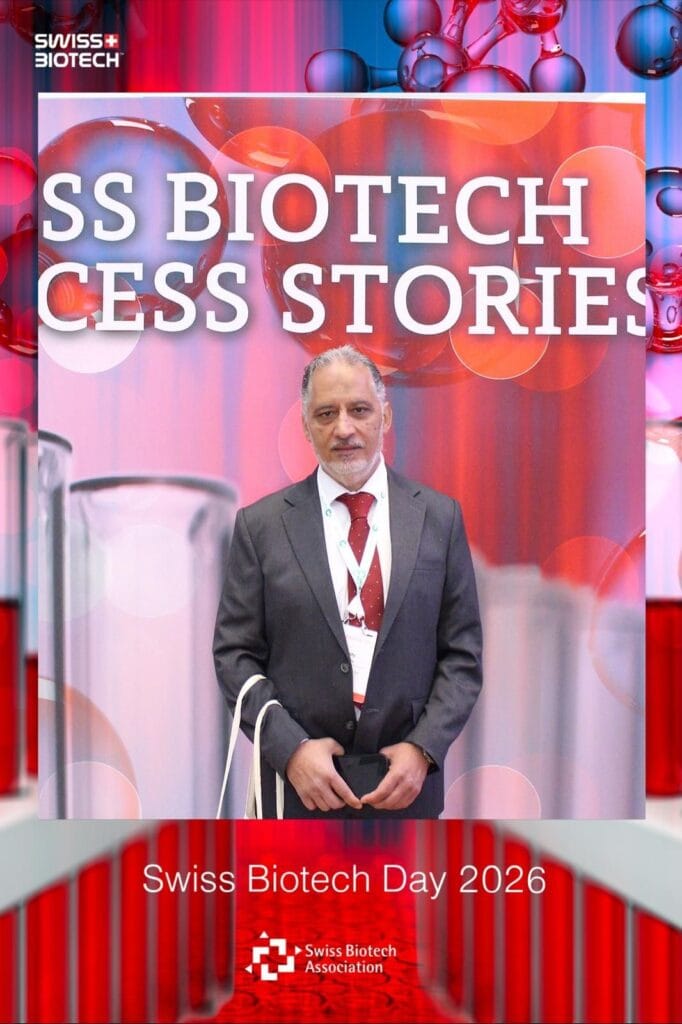
We are currently at the Congress Center Basel for Swiss Biotech Association Day 2026, and the energy here is incredible. As the life sciences industry embraces digital transformation,TrustSEC is here to ensure that innovation is built on a foundation of total security.📍 Visit us: We are located in the heart of the action on the third floor. Come by and say hello! Booth: Eureka Network MB3 Floor: Level 3 (Global Village & Mentoring area) Navigation: https://lnkd.in/dVm7U2RA🛡️ Why TrustSEC in Healthcare? Protecting intellectual property and sensitive patient data is no longer just a “tech” concern, it’s a patient safety concern. -Secure Biometric Access: Multi-factor authentication for labs and digital records. -PKI & Smart Card Solutions: Hardened security for data integrity and identity management. -Regulatory Peace of Mind: Simplifying compliance for global standards like GDPR and HIPAA. Stop by to discuss how we can help secure your biotech breakthroughs. See you on Level 3! hashtag#SwissBiotechDay hashtag#SBD2026 hashtag#BiotechSecurity hashtag#HealthTech hashtag#TrustSec hashtag#CyberSecurity
Trustsec to Showcase Innovations at GITEX Europe 2026 in Berlin
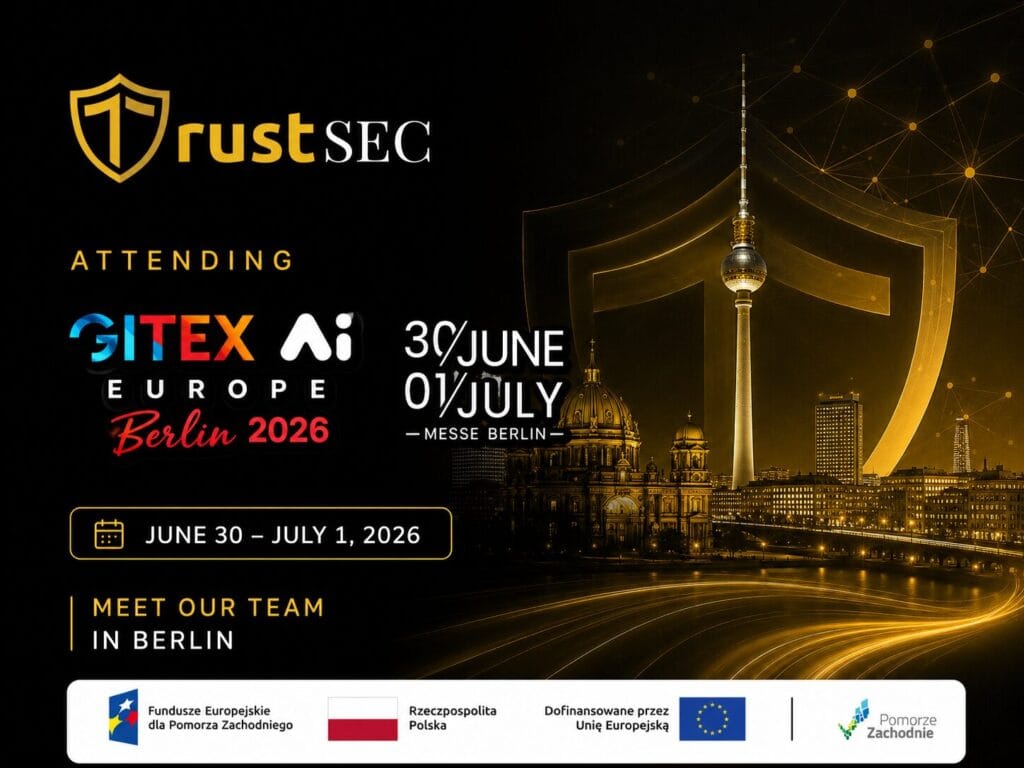
We are excited to share that Trustsec will be joining industry pioneers, tech innovators, and global leaders at GITEX EUROPE 2026, taking place in Berlin from June 30 to July 1, 2026. GITEX Europe is renowned for bringing together the brightest minds and most forward-thinking companies in the technology sector. For Trustsec, this event represents a fantastic opportunity to expand our international footprint, present our latest advancements, and build meaningful partnerships across Europe and beyond. Udział w wydarzeniu dofinansowany w ramach projektu niekonkurencyjnego pn „Ster na Eksport” realizowany w ramach programu Fundusze Europejskie dla Pomorza Zachodniego 2021-2027, Działanie 1.9 Przygotowanie i wdrożenie nowych modeli biznesowych przedsiębiorstw (w tym wspólne projekty przedsiębiorstw i IOB) – Typ projektu 3 Promocja eksportu i internacjonalizacja MŚP.
TrustSEC and HID® Partner to Deliver the Next Generation of Biometric Smart Cards
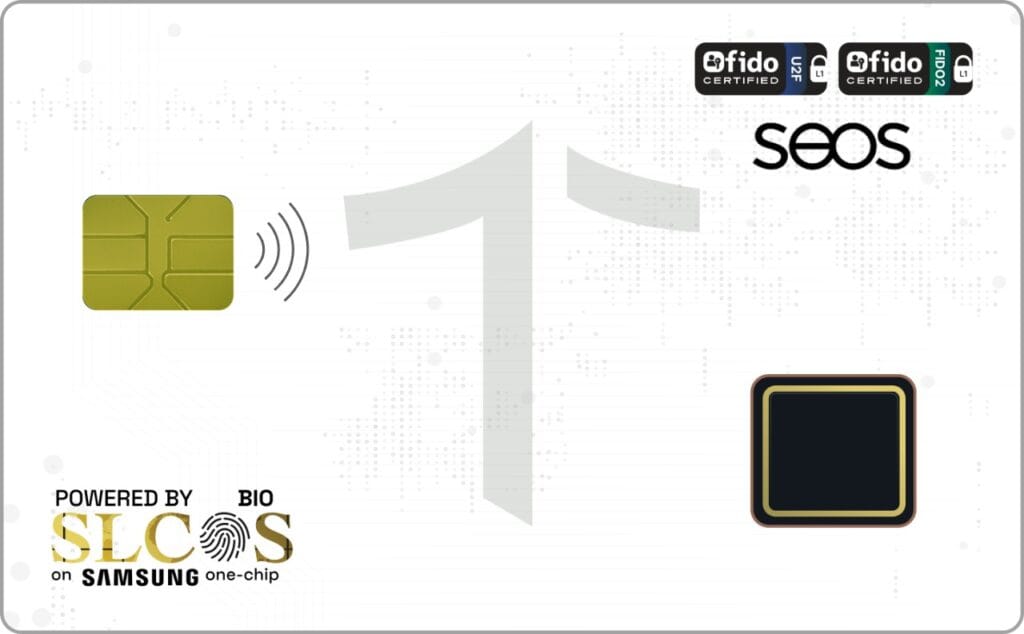
Converged identity is entering a new era. TrustSEC is proud to announce a strategic partnership with HID® to develop the SAMSUNG One-Chip Bio Smart Card, powered by the TrustSEC Java Card BIO SLCOS and featuring the HID® Seos® applet. This groundbreaking solution represents the ultimate evolution in secure, converged identity, engineered for maximum assurance, privacy, and user convenience. A New Standard in Converged Identity As organizations demand stronger security without sacrificing usability, traditional access cards are no longer enough. The SAMSUNG One-Chip Bio Smart Card delivers a single, secure credential that seamlessly combines: Physical access control Logical (IT) access On-card biometric authentication By unifying these capabilities into one credential, TrustSEC and HID® are redefining how enterprises and governments approach identity assurance. Powered by TrustSEC Java Card OS and HID® Seos® At the core of this advanced smart card is the TrustSEC Java Card, BIO SLCOS, designed to meet the highest standards for secure identity applications. The inclusion of the HID® Seos® applet ensures compatibility with industry-leading access control systems while maintaining flexibility for future identity use cases. This powerful combination enables organizations to deploy a future-proof, standards-compliant identity solution that integrates effortlessly into existing infrastructures. True On-Card Biometric Security What truly sets the SAMSUNG One-Chip Bio Smart Card apart is its innovative all-in-one chip architecture. The card integrates: A fingerprint sensor A Secure Element (SE) A Secure Processor This unique design allows biometric matching to occur entirely on the card. The user’s fingerprint data never leaves the secure environment, eliminating the risks associated with external biometric processing or data transmission. Key Security Benefits: Biometric data is stored and matched securely on-card No biometric data is shared with readers or backend systems Reduced attack surface and enhanced privacy protection Compliance with strict enterprise and government security requirements Designed for High-Assurance Environments The SAMSUNG One-Chip Bio Smart Card is engineered for the most demanding enterprise and government applications, including critical infrastructure, regulated industries, and high-security facilities. By combining biometrics, cryptographic security, and trusted access technologies in a single credential, organizations can achieve: Strong multi-factor authentication Seamless user experience Improved identity lifecycle management Higher levels of trust and compliance The Future of Secure Identity The partnership between TrustSEC and HID® marks a significant milestone in the evolution of secure identity solutions. The SAMSUNG One-Chip Bio Smart Card delivers a seamless, highly secure, and user-centric authentication experience, setting a new benchmark for converged physical and logical access control. As identity threats continue to evolve, solutions like this ensure organizations stay ahead—without compromising security, privacy, or usability.
TrustSEC x Samsung One-Chip: One Year Later — Turning Innovation Into Market-Ready Reality 🔐💳
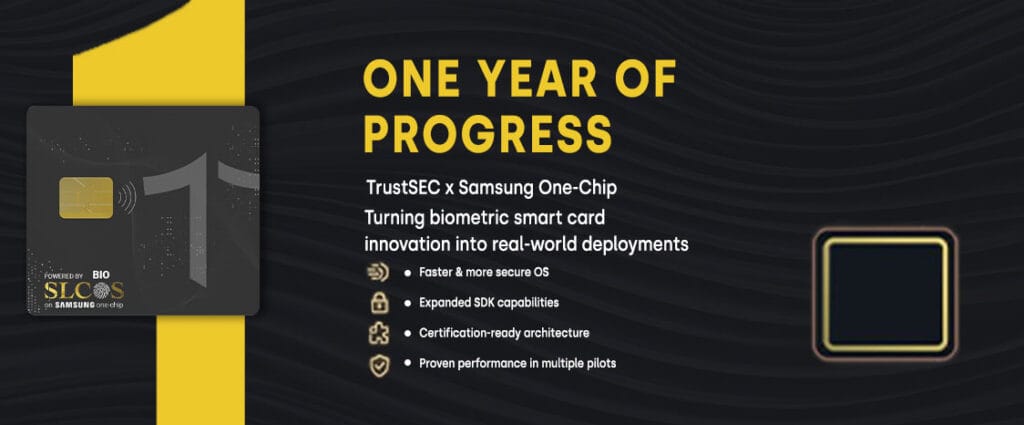
A year ago, we introduced our breakthrough smart card OS built for the Samsung One-Chip platform. Today, that vision has evolved into a fully optimized, production-ready biometric smart card foundation trusted by partners and integrators worldwide. Over the past 12 months, our joint work with Samsung Electronics has accelerated on every front performance, security, interoperability, and customization. The result: a platform that doesn’t just push the boundaries of technology, but makes biometric card deployment simpler, faster, and more scalable than ever. What’s New This Year * Optimized OS architecture delivering faster biometric matching and reduced power consumption * Expanded SDK toolset enabling integrators to tailor use cases in payments, access control, identity, and IoT security * Advanced secure processing pipeline with improved anti-spoofing and runtime protections * Certification-ready design aligned with industry security schemes and EUDI requirements * Multiple partner evaluations and pilots proving the platform’s readiness for real-world adoption Why it Matters 1-Organizations are looking for strong authentication, that is: 2-Ultra-secure 3-User-friendly 4-Easy to integrate 5-Future-proof for digital identity ecosystems TrustSEC’s customizable OS on Samsung One-Chip delivers exactly that—a unified biometric smart card platform engineered for both high performance and high assurance. Driving the Next Chapter of Biometric Innovation As demand for secure, flexible authentication grows across payments, access control, mobility, and government identity, we remain committed to enabling partners with technology that adapts to their needs—not the other way around. If your roadmap includes next-generation biometric cards or identity solutions, we’re ready to help you build what’s next. #TrustSEC #SamsungOneChip #BiometricSmartCards #SmartCardOS #SecureIdentity #AccessControl #PaymentSecurity #BiometricInnovation #DigitalIdentity #FingerprintTechnology #NextGenerationSecurity
Quantum Ready: Future-proofing Authentication with PQC and BIO-SLCOS
Introduction Quantum computers are evolving fast. While not yet powerful enough to break today’s encryption, experts warn they will soon threaten vital systems—particularly those relying on public-key cryptography. In fact, the EU’s post-quantum cryptography (PQC) roadmap advises all member states to begin migrating by end of 2026, with critical systems secured by 2030. This “harvest now, decrypt later” threat makes upgrading now essential. At TrustSEC, we’re already ahead. By combining BIO-SLCOS smartcard operating systems with biometric smartcards and PQC plans, we help organizations build authentication that lasts—not just today, but into the future. 1. Why Post-Quantum Cryptography Matters 1.1 The Coming “Quantum Threat” Current standards like RSA-2048 and ECC-256 will become vulnerable once quantum computers are capable of executing Shor’s algorithm at scale. This means sensitive data intercepted now may be decrypted in future—posing an existential threat to long-term privacy. 1.2 EU Policy Making It Urgent The EU’s roadmap mandates first-phase PQC readiness by end of 2026, and full protection of high-risk systems (banks, energy grids, government, telecom) by 2030. Waiting isn’t an option—organizations must act now to avoid future backlogs. 2. The Importance of Hardware-Rooted PQC 2.1 Beyond Software—Hardware Matters Software-based PQC isn’t enough. The most secure deployments combine PQC algorithms + hardware roots of trust. Smartcards use secure elements (SE) and deliver strong protection, even in threat-rich environments. 2.2 PQC on Smartcards: Challenging but Doable Academic and industry research (NIST, Toppan/NICT, IDEMIA, Thales) confirms PQC can be implemented on resource-constrained smartcards—though tradeoffs exist in performance and key size. Case studies show success using hybrid approaches (ECC + PQC), smartcard accelerators, and memory optimizations to make PQC viable on-card. 3. BIO-SLCOS + PQC: A Future-Ready Alliance 3.1 What Is BIO-SLCOS? BIO-SLCOS is TrustSEC’s proprietary smartcard operating system, with Match-on-Card biometric support and customizable applets (FIDO2, PKI, OTP). It ensures fingerprint data never leaves the secure element—meeting both security and privacy standards. 3.2 Encryption Strengthened With PQC TrustSEC is integrating PQC into BIO-SLCOS, enabling hybrid support for classical algorithms (RSA/ECC) plus quantum-resistant alternatives (like Crystals-Kyber, Dilithium). This gives organizations a smooth migration path—and futureproof authentication. 3.3 Why BIO-SLCOS + PQC Works Preserve hardware trust: Keys never leave the SE. Match-on-Card: Biometric authentication remains fast and private. Crypto agility: Possible to update PQC algorithms later via firmware. Regulatory alignment: Meets EU PQC timelines and identity standards. 4. Real-World Use Cases 4.1 Government & eGov National agencies need secure, offline, and sovereign ID systems. BIO-SLCOS with PQC meets eIDAS 2.0 and hybrid PKI/TLS future needs. 4.2 Critical Infrastructure Energy grids, telecoms, and utilities must comply with EU PQC by 2030. Smartcard-based biometrics add a strong security layer. 4.3 Enterprise & Banking Sensitive corporate systems can leverage PKI tokens with on-board PQC and biometrics to protect long-term internal and external communication. 4.4 IoT & Automotive Every connected system needs unique identities. BIO-SLCOS+PQC applets automate secure identity, vital in smart grids and connected vehicles. 5. Meeting Regulatory Imperatives 5.1 EU’s Roadmap is Non-Negotiable By end 2026, nations must have national PQC strategies. By 2030, critical sectors must use quantum-safe encryption. TrustSEC supports this with hardware PKI tokens and crypto-agile OS. 5.2 GDPR & eIDAS 2.0 eIDAS 2.0 also encourages hardware-based self-sovereign identity. BIO-SLCOS ensures compliance while adding biometric protection. 6. Best Practices for PQC Implementation Step Recommendation Assess Catalog all PKI endpoints and lifespan. Pilot Start hybrid PQC+RSA/ECC smartcard test. Deploy Roll out fully only when hybrid modes stable. Monitor/Upgrade Stay crypto-agile; swap algorithms as needed. Educate & Certify Ensure users and regulators know your roadmap. 7. How TrustSEC Helps PQC-friendly BIO-SLCOS: Ready for hybrid algorithms. Certified hardware tokens: FIDO2, GDPR, eIDAS compliance. Roadmap support: Certification timeline and OS updates. Consulting & onboarding: Step-by-step integration help. Stay ahead, not behind move to hardware-based authentication today. Combining PQC with biometric smartcards is the only secure path forward. Contact Us to see how BIO-SLCOS can secure your infrastructure beyond 2030. SO, Quantum threats won’t wait. By deploying BIO-SLCOS smartcards with biometric and PQC readiness, you build a trustworthy, compliant, and future-proof identity system. It’s not a distant goal, it’s your next step in secure identity. Get Started with Quantum-Secure Authentication